Interviews
The first thing we ask founders about is their personal journey and motivation - Alina Klarner, Impact Shakers
December 1, 2025 · Oana Modorcea
.png)
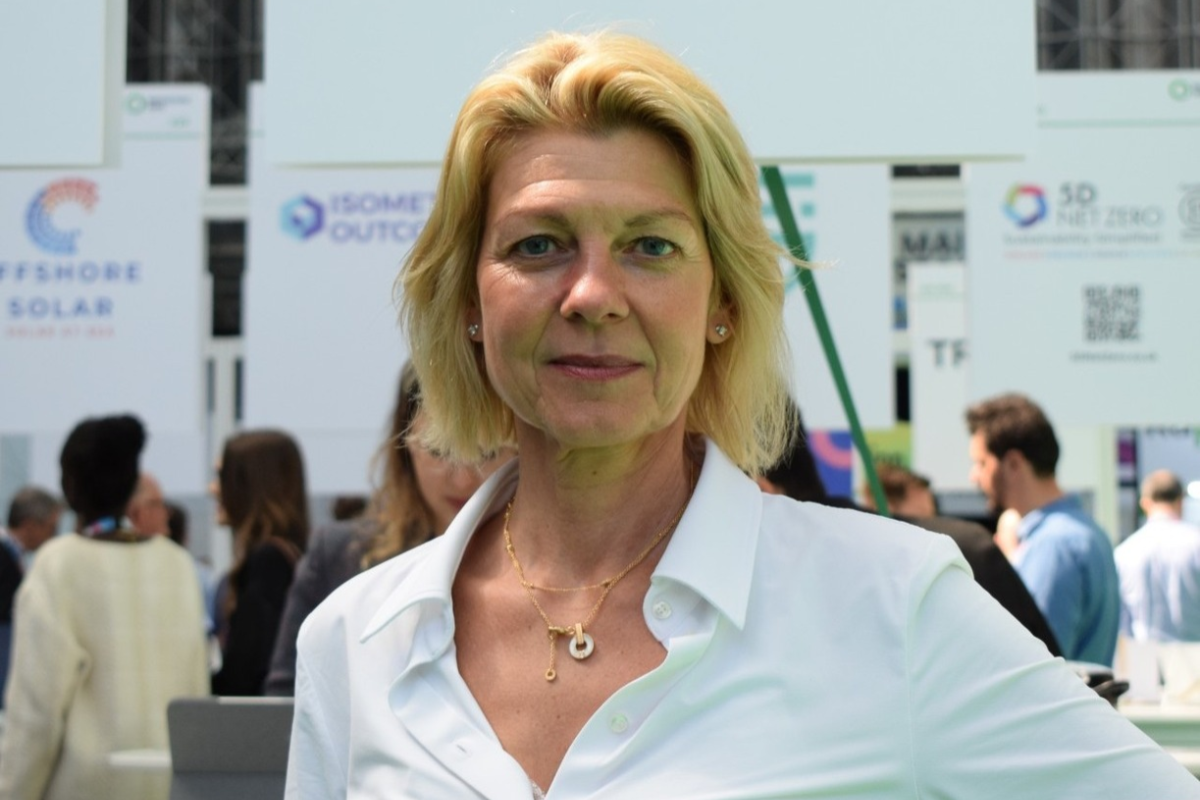
Alina Klarner is a Founding Partner at Impact Shakers, a global impact ecosystem addressing societal and environmental challenges through investments, programmes and events.
Alina Klarner is a Founding Partner at Impact Shakers, a global impact ecosystem addressing societal and environmental challenges through investments, programmes and events. In 2024, Impact Shakers announced a EUR 20 million Venture Fund and since then, they have invested in 13 startups, across 9 countries and all of their verticals - ClimateTech, InclusionTech, and Impact Infrastructure.
“In addition to the capital we deployed, almost 3x as much has been invested by others, including Worldfund, Zubi Ventures, General Catalyst, SFC and a number of European family offices.
I am proud of every single one of them - we invest in less than 0.5% of start-ups we see and there is just such exceptional talent out there, that the opportunities are much, much larger than what we can capture with this first €20mil fund.” says Alina.
When it comes to startups that stand out to the team at Impact Shakers, Alina says they are looking for businesses that can have a positive contribution to systemic change.
“This means founders who are willing to question the things we take for granted and bravely rethink entire processes and industries based on deep lived experience, personal or professional.” she explains.
“It’s people who are enabling participation in the economy, not consumption, who care for the health of those overlooked communities, who are rethinking how we build & produce within the planetary boundaries.
We have set this out in our Impact Principles, which are public to provide more transparency around our decision making.
And then the first thing we ask founders about is their personal journey and motivation, not the business. Everyone says they invest in teams, not businesses, but at the very early stages, you also invest in personal missions and motivations - and a belief that the founder will fight, with your support, for a mission they truly believe in and live!”
When fundraising, Alina says that most founders make this common mistakes:
“Most founders think the way to fundraise is to approach 1,000 potential investors and get 999 rejections. That’s a waste of time.
We’d much rather they spent the time researching potential investors and picking the 20 that actually match their business and build a relationship with them.
The second thing is to leverage the people you know - if you have existing investors, they’re most likely your best shot at raising money from and if they can’t invest, giving them a list of people they can make introductions to will help. This way, you can leverage your network and theirs, increasing your chances to get a foot in the door with someone who is a good match.”
Still, investors say “no” and for a million reasons - the thesis, wrong geography, investment in a competitor and so on. But this can be a learning opportunity:
“There is no point trying to convince someone to invest outside of their thesis - this is part of why researching potential investors is so important.
Whether an investor actually means no or it is truly a matter of building more proof points, there is no downside to them in telling you that they would like to stay in touch.
You can try to get specific feedback and if you have done your research and are convinced it’s a fit, then it’s great to have a simple, regular investor newsletter for those “future yes’” and keep building the relationship.
It is not personal, but of course if the startup is your life’s mission, it’s very hard not to take it personally. We try to provide very honest and open feedback to the startups we say no to, especially if we have done some due diligence, in the hope that the founders can hopefully take away some useful insights.”
Another struggle impact founders face is the tension between their mission and scalability - building scalable business models is critical for their growth and for investment. Alina says that while this is something they look at, not all businesses have to hyperscale, especially if this would endanger their mission.
“Less than 1% of startups received VC funding - that doesn’t mean that there are only 1% great startups out there. We need to let go of the myth that VC is the only way to scale a business and that the Unicorn path defined in the US is the way to build a success story in Europe.
Yes, there is a specific type of business we look for with the Venture Fund, but we have a conversation with every founding team to make sure that this is what they want.
Once we invest, we then work with them in our Impact Readiness Level framework, to make sure we build impact into every aspect of the business - from GTM to Product to legal docs so that the business can truly grow in lockstep and find impact-product-market fit.
If you feel that scale will endanger your mission, maybe you need to work on your business model, maybe you don’t need to hyperscale, or maybe you need a different type of capital.”
Turning to the impact-VC world and how it can support more diverse founders and teams, Alina says that the main problem resides in how most traditional pipelines are built. She proposes an alternative:
“At Impact Shakers, we have spent years building an ecosystem of investors, accelerators, incubators, universities and many others who support diverse impact founders. All of them share dealflow, so there is a pre-selection on what we get to see from our network.
On the scouting side, we have spent years building our own presence - events, pitching competitions, weekly posts on startups to watch, impact funds and open calls for applications, a newsletter, our own scouting.
All of these deliver us a specific type of dealflow - exceptional diverse founders working on ClimateTech, Inclusions Tech and Impact Infrastructure.”
To make diversity the norm in the VC world, a systematic change is needed, Alina adds. While so many things need to happen to enable this transformation, here’s the crucial one:
“Make the investor base more diverse. Still today, only 1.4% of VC and PE capital in the US is managed by diverse managers - which is well reflected in the 2% of funding going to female founders and founders of colour.
We all have bias, so it is about building an ecosystem of investment decision makers who are diverse in their own right. Women are 2x more likely to invest in female-led startups, so a more diverse investor base (beyond just gender) will deliver better outcomes for diverse founders. Who in turn will deliver better exits and more innovation.
And if they have a successful exit, the founders in their own right will be more likely to invest in diverse-led funds, startups, etc, creating a virtuous circle.”
In the following years, she hopes that the VC landscape in Europe will become stronger and “brave enough to take early risks and find ways of using existing and new types of capital to scale impact innovation in a way that fits into the European markets and into our reality.
We have an incredible amount of exceptional founders, ground-breaking innovation and people who want to build for the planet and people.
I am excited to help build success stories across ClimateTech and InclusionTech that will help us shift entire systems, move towards true collaboration and tap into the entire innovation potential a diverse and inclusive ecosystem has to offer. Besides investing ourselves, one of our core KPIs is to catalyse 10x the amount we invest into the ventures we support.
If we can scale to €500mil AUM in the medium terms and catalyse 10x that, we are able to shift the amount of capital going to diverse teams by 8-10%! And as a good friend told me recently: In order to shift a system, you only need 7-12% of people to be on board.”
Finally, we asked Alina where she sees the most promising opportunities for innovation in the impact-driven ecosystem - the trends or technologies that will define the next generation of founders in this space.
“AI, without a doubt. But not the hype AI that is creating bubbles, the type of AI that enables true transformation of how we build and operate businesses, what we build them for and who gets to build them.
I deeply believe that AI is both an accelerant, as well as an enabler for both impact and systems change across both climate and social topics. When you see Big Tech investing in renewable energy or founders scaling to €10mil+ in revenue with 4 people, you know things are changing.
At the same time, overlooked datasets in areas like FemTech or Deskless Workers all of a sudden become a valuable asset. We are particularly excited about founders who build based on deep expertise and a hair-on-fire problem, but use AI to build faster, leaner and more efficiently.“
Thank you, Alina Klarner!