Interviews
We believe in industrial evolution over disruption - Julia Minici, Afterwind
May 20, 2026 · Oana Modorcea
.png)
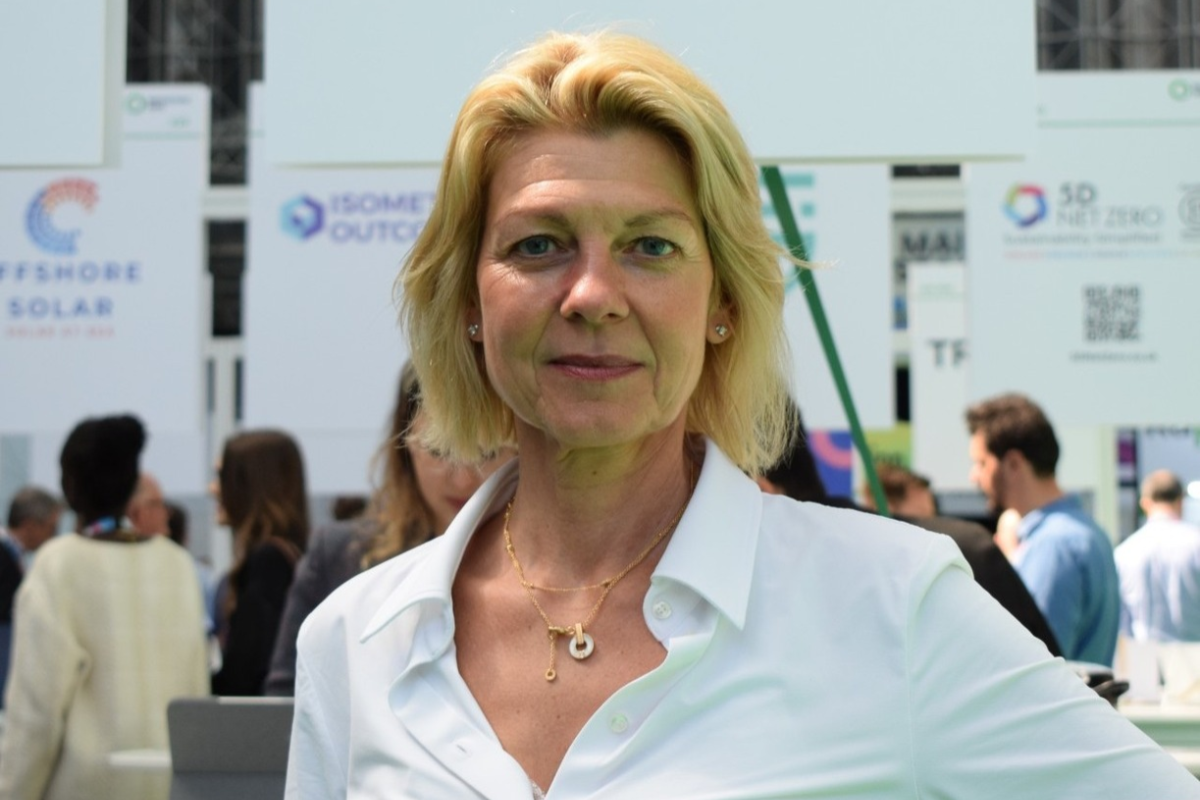
Julia Minici is the Founder of Afterwind, a Swedish deep-tech impact company that helps asset owners and industrial manufacturers recover and reuse end-of-life and byproduct materials. By recycling glass fiber assets into circular advanced materials with full traceability, the startup aims to preserve natural resources while solving a mounting industrial waste crisis.
Julia Minici is the Founder of Afterwind, a Swedish deep-tech impact company that helps asset owners and industrial manufacturers recover and reuse end-of-life and byproduct materials. By recycling glass fiber assets into circular advanced materials with full traceability, the startup aims to preserve natural resources while solving a mounting industrial waste crisis.
Launched in 2023, Afterwind was born from a clear market void. Within a single quarter, three separate ventures approached Julia and her team with the same challenge: they needed a better solution for composite waste. This convergence made it clear that the problem was both real and rapidly growing.
“Wind energy is one of the strongest symbols of the green transition. Yet the infrastructure enabling it—especially turbine blades made from glass fibre composites engineered to last decades in extreme conditions—is becoming an industrial-scale waste challenge, with no viable end-of-life solution. It exposes a fundamental contradiction: you cannot have a sustainable energy transition without sustainable materials.
At the same time, industries like advanced materials manufacturing, construction, and automotive are under pressure to decarbonize, increase the share of recycled content, and reduce reliance on virgin raw materials—yet lack access to high-quality, scalable alternatives.
Afterwind was built to accelerate the shift: making circular advanced materials scalable, competitive, and inevitable. That means preserving material value, recovering fibres that can replace virgin inputs, and making circular materials the default.
The company builds on the founders’ combined experience—and a shared conviction.
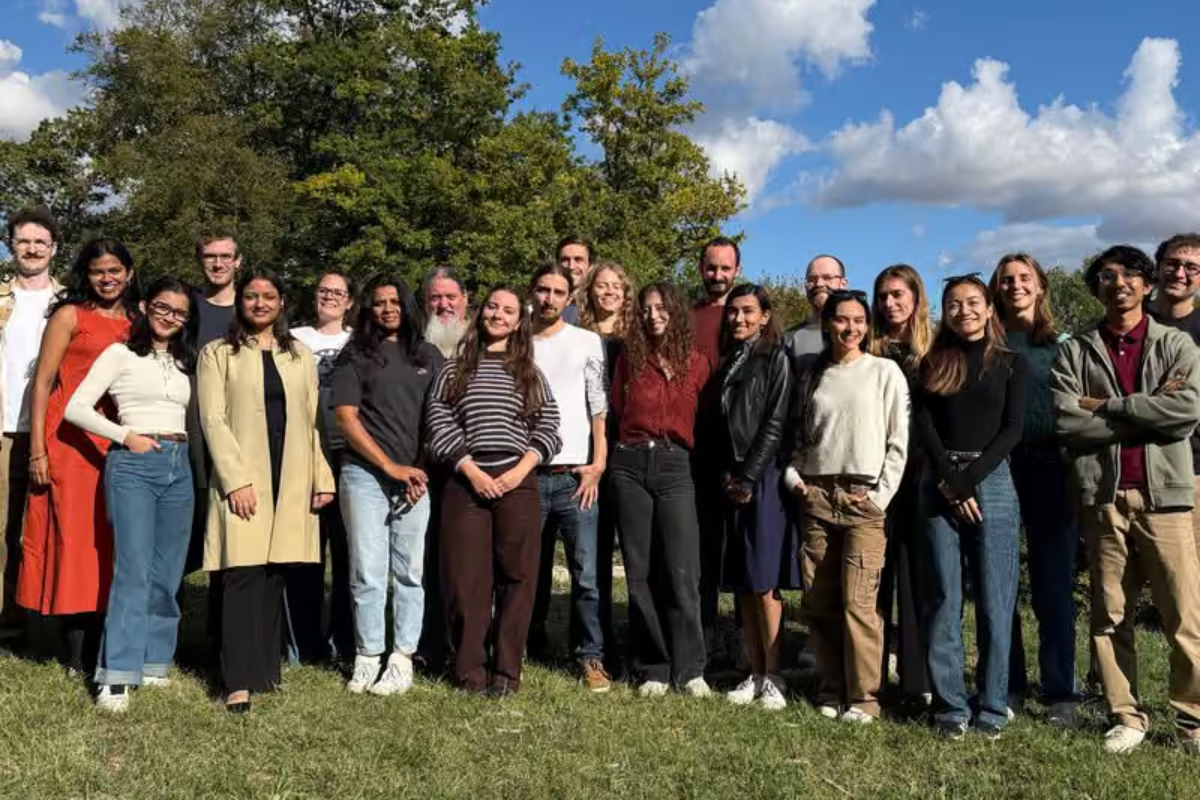
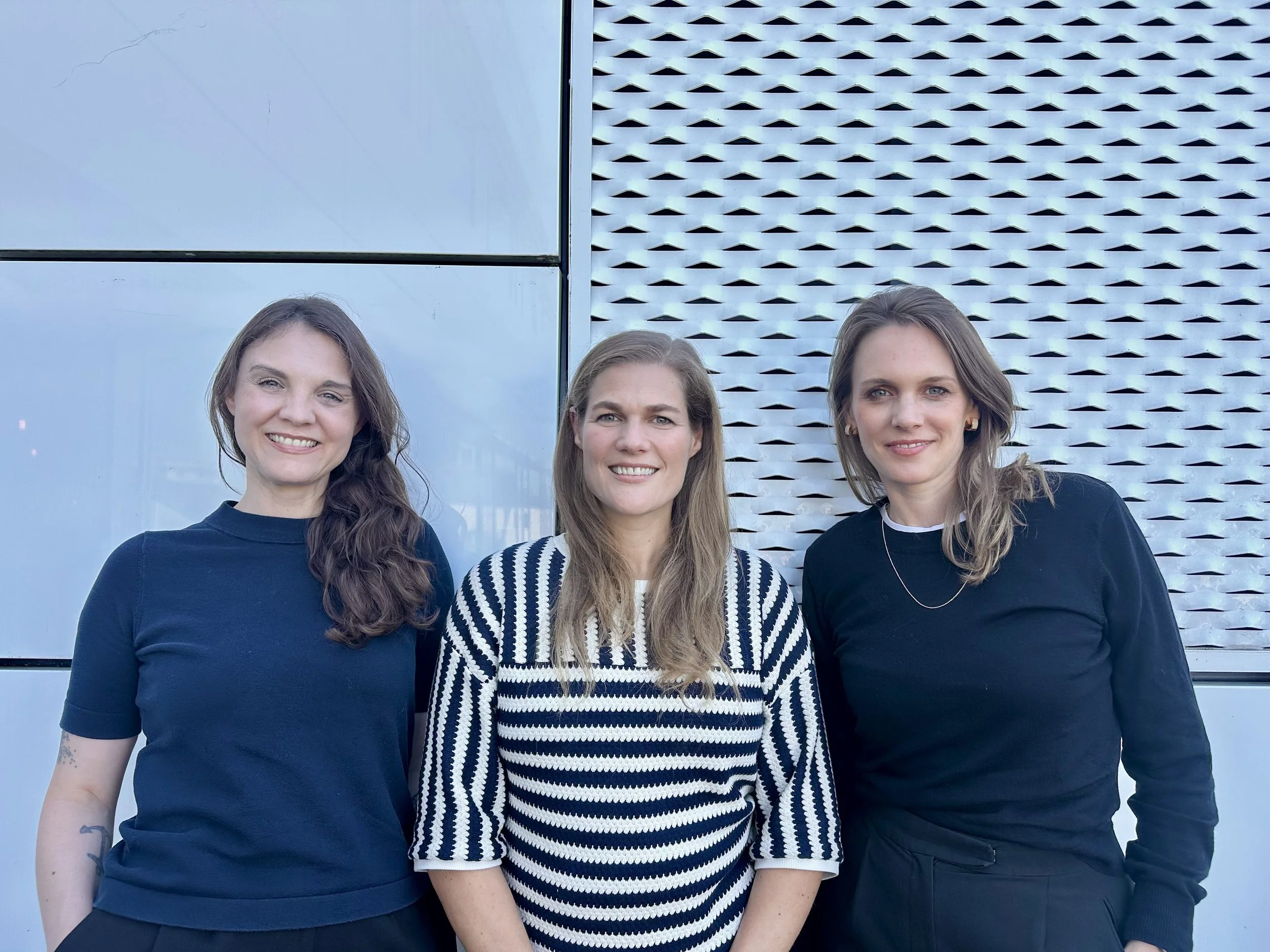
Henrik, our CTO, has spent the past 20 years developing and operating recycling technologies on an industrial scale. Sune is a seasoned entrepreneur who has built and scaled businesses globally, and I bring corporate experience working across large organizations and complex value chains.
Our ambition is to redefine how composite materials are valued, recovered, and reused, transforming a growing environmental liability into an asset and setting a new standard for the industry.” Julia explains.
.png)
Rather than simply treating waste, Afterwind creates assets that can be reintegrated into industrial supply chains. Their approach focuses on recovering valuable materials from complex composites without compromising their structural performance.
“This allows us to separate and recover key components such as glass fibres, foams, and resin powders, which can then be used again in new applications.
Where possible, we rely on low-energy, primarily mechanical processes to minimise both energy use and emissions. At the product level, our materials can reduce emissions by over 90% compared to virgin alternatives, while maintaining industrial-grade performance.
We focus on producing certified raw materials—not finished products—so that our outputs can be directly integrated into existing manufacturing processes.
Today, our materials are designed to complement virgin inputs, making it easier for manufacturers to introduce recycled content without compromising performance. Over time, as adoption grows, we aim to increase the share of circular materials across industries.”
There is a clear lack of viable solutions, Julia explains, in wind energy, construction, and automotive, and fortunately, even the largest players are open to collaborating with smaller, innovative companies
“On our input side, sectors like renewable energy are focused on solving an end-of-life challenge—managing blade waste responsibly, reducing environmental impact, and de-risking future liabilities. This push is coming both from end-users and increasingly from regulation.
On our output side, industries such as advanced materials, construction, and automotive are looking for sustainable, high-quality feedstock. Here, the demand is driven not only by decarbonization targets, but also by geopolitics—there is a growing interest in retaining critical materials in Europe and building more resilient, local industrial supply chains.
What connects both sides is the need for consistent performance and solutions that integrate into real operations. For large industrial players, changing materials or suppliers is complex and costly. It requires consistent quality, certification, and reliable volumes. That’s why our focus is on proving performance and scaling up—so that integrating recycled materials becomes not just desirable, but viable in real operations.”
The feedback Afterwind received during its early stages was consistent: the industry isn't looking for promises, but for solutions that reduce risk and can function within existing financial and operational frameworks.
“Early on, it was all about credibility. We came in with a fresh perspective on a well-known problem, which sparked both curiosity and strong engagement—and often meant being asked to take on the most complex challenges first.
Once we demonstrated that we were grounded, focused on quality, and committed for the long term—as a reliable and flexible partner— the conversation shifted decisively from if this works to how fast we can scale it.
A key insight was that both the assets and the definition of circularity are still evolving. Assets are inherently variable—by manufacturer, generation, and decades of exposure—and even what “circular” means differs across the industry.
We built our approach around that reality—staying nimble and agile to meet market demand, and focusing on circular advanced materials and real end-use, not just technology.
Producing reliable, certifiable material from variable assets—and handling blade intake at scale—remains largely unsolved, we are actively engaged with WindEurope and European Circular Composite Alliance, as well as contributing to IEA Task 45—helping shape and scale practical circular solutions across the value chain.”

Today, Afterwind moved from small-scale validation to commercial and industrial validation. They have built and proven their process, have a team with extensive experience across recycling, composite materials, industrial operations, client delivery, and sustainability and they have already processed and moved over 100 tons of material.
Afterwind generated revenue in their first year, raised a seed round and is now preparing for their Series A and is negotiating long-term agreements with key players across the value chain.
What helped Julia and the team negotiate the challenges and uncertainty they faced during these almost three years, is a mix of mindsets and processes.
“In a space this complex, clarity of values becomes a competitive advantage. Those shouldn’t change, even when everything else does. Execution evolves, plans shift, and you constantly adapt—but principles should remain constant.
First, we put people, communities, and the environment at the center of everything we do. It’s not just a statement—it guides how we make decisions, especially when things get uncertain.
Second, quality and reliability are non-negotiable. We are building a new category— circular advanced materials—so a lot is still undefined. That makes it even more important to set a high bar and not compromise on it.
We also believe in industrial evolution over disruption. We’re not trying to force change—we’re building something that works in the real world, with discipline and respect for how the industry operates. That makes us more pragmatic and ultimately more scalable.
A big part of how we navigate uncertainty is by working closely with customers and working backwards from their needs. It keeps us grounded and ensures what we build creates value.
And finally, we combine ambition with pragmatism. We believe we can help set a new standard for the industry, but we also know this is a long game. So, we stay flexible in execution, collaborative in how we work, and consistent in how we show up.”
What also helped, she adds, are the relationships she’d built even before launching Afterwind. Through her career and even before that, some of the people she had met provided support in this new business.
“I never thought of myself as someone who relied on networks or personal brand—but rather on execution, putting my head down and delivering. Seeing these people show up and take a chance on us has been incredibly rewarding, but it also brings a deep sense of responsibility.
At the same time, external ecosystems have been instrumental. The European innovation landscape—through the EIC, EIT, ClimateKIC—helped us navigate the ecosystem. A defining early moment was when London Business School students selected Afterwind for the Turner-MIINT Wharton competition. That was at the very beginning of our journey, when we still had everything to prove, and it gave us both visibility and confidence.
More broadly, I strongly believe in continuous learning. I make space for it intentionally. And over time, I have also come to appreciate the importance of a personal brand. Not in a superficial way, but in the sense that how you show up, what you stand for, and how you work consistently over time—that is what people remember. You may miss some opportunities along the way, but in the long run, it is what carries you through your career.”
Building and scaling circular solutions for advanced materials is no easy feat and it all comes down to execution, she says. The biggest challenge lies in building the right operations and team from the start - this is what success depends on. What is critical is for structure to be built early on - for example, Afterwind is implementing ISO standards from the outset and preparing for certification.
“A big part of that is people. Before you can manage others, you have to be able to manage yourself. A startup is an all-consuming environment, and building something at scale requires both personal discipline and the ability to bring in people who are stronger than you in their respective areas—people who are ambitious, independent, and comfortable operating in uncertainty.
We have changed the team more than once over the past three years, which has been a critical part of the journey. It is not always easy, but it is how you build the right foundation—and today, we are building a strong team that is ready for the next phase of growth.
From an ecosystem perspective, startups need more practical support—not just advisors or training. Early on, founders cover every function—sales, operations, investor relations, finance, HR, legal—and reducing friction in non-core areas can significantly accelerate progress.
Shared services, support with legal, payroll and accounting, access to high-quality talent through programs like InnoNext, and even practical support such as travel grants across Europe to build partnerships can make a real difference.
At the same time, building industrial, capital-intensive businesses requires a different approach—one that values patience, consistency, and long-term execution. Looking ahead, the challenge is no longer proving that circular solutions work—it is scaling them reliably. That is where we are focused: building the team, the processes, and the operational backbone to deliver at industrial scale.”
Looking ahead, in five years’ time, Julia says that Afterwind will be one of the companies that fundamentally changed how materials flow in Europe.
“We aim to be operating at scale across multiple countries, with facilities running at full capacity and fully embedded in industrial supply chains—not as an alternative, but as part of the industrial standard.
Today, less than 10,000 tonnes of composite materials are recycled annually in Europe, while close to 1 million tonnes become available every year. That gap should not exist—and we are building to close it—doubling recycling capacity already in 2026 and proving that circular materials can compete, perform, and scale.
But beyond scale, the real shift is mindset. Recycled materials will become the default, not the exception—reaching a point where choosing circular is no longer a compromise, but simply how things are done.
We also see Afterwind expanding beyond its initial scope—into new products, industries, and applications—building a broader platform for circular advanced materials.
And internally, success means building a company where people are proud of what they are part of—where we do not just grow, but continuously raise the bar for ourselves, for the industry and for our communities.
Ultimately, if we execute on this vision, we will not just have built a company—we will have helped build a new industry.”
Thank you, Julia Minici!