.png)

From the very beginning, I believed that sustainability has to make business sense - Hlynur Rafn Guðmundsson, Humble
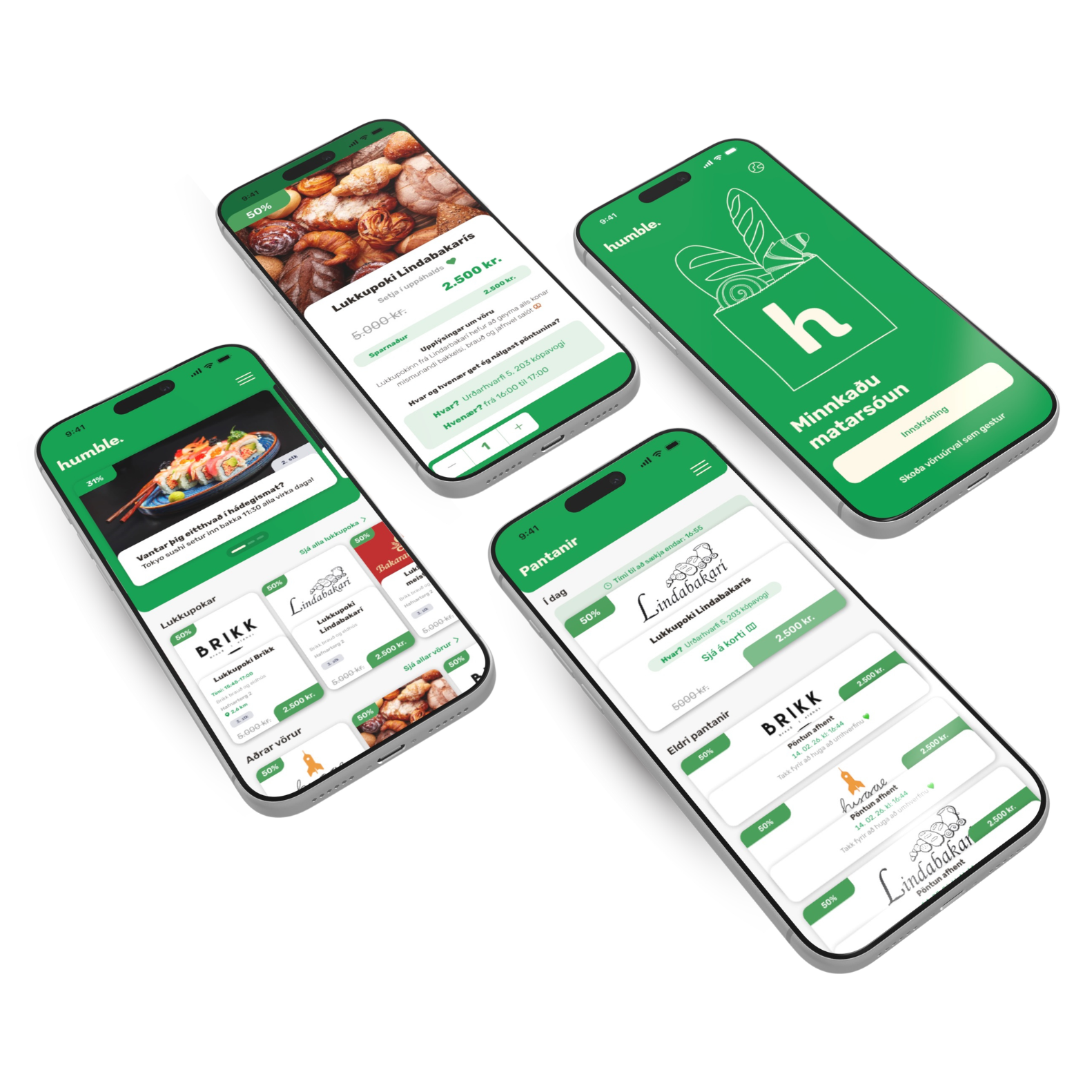
Hlynur Rafn Guðmundsson is the Co-founder of Humble, an Icelandic startup dedicated to ending food waste by connecting local vendors with a community of conscious shoppers. He co-founded this business together with Steinn Arnar Kjartansson and Andri Geir Arnarson after finishing university. They have known each other for most of their lives and they knew they wanted to build something together. One topic kept coming up - food waste.
“What struck us was that food waste isn't one of those impossible problems. Businesses aren't throwing food away because they want to—it's simply a by-product of trying to meet customer demand. Restaurants and bakeries would much rather sell their products than throw them away.
We sat down one evening, came up with three different business ideas and wrote business plans for all of them. We applied for innovation grants, and two of the projects were accepted. That gave us both the confidence and the funding to take the first steps.
From the very beginning, I believed that sustainability has to make business sense. If businesses make more money, consumers save money and the environment benefits at the same time, you've created something that has a real chance of lasting. That's still the philosophy behind Humble today.” says Hlynur.
The three co-founders bring complementary skills to the table - Andri leads the technical side, Steinn looks after finance and operations, and Hlynur focuses on partnerships, sales, marketing and fundraising.
“That said, startups don't really work like job descriptions. We all end up helping wherever we're needed. We all contribute to strategy, fundraising and the big decisions.
We've also been lucky to attract some fantastic employees over the years. They've had a huge influence on everything from development and design to marketing.
If I had to give one piece of advice about choosing co-founders, it would be this: choose people you genuinely trust. Skills matter, but they're easier to develop than trust. You'll spend years solving problems together, disagreeing, making mistakes and celebrating wins. Having people around you who share your values and communicate honestly makes all the difference.”
From 2020 to 2023, when they raised money, Hlynur adds that Humble wasn’t their full-time job. While building the company, they were alos working and studying.
“Looking back, I actually think that helped us. It gave us time to experiment. We tested different business models, changed direction more than once and learned what customers actually wanted instead of what we thought they wanted.
One thing we learned early was how important communication is between founders.
With three founders, you won't agree on everything. For smaller decisions, we'd often just go with the majority and move on. But when it came to bigger strategic decisions, we realised everyone had to be on board. Those are the decisions you'll still be living with years later.
Whenever communication wasn't great, problems started to build up. Whenever we kept talking openly and honestly, most of those problems disappeared surprisingly quickly. It sounds simple, but I think that's been one of our biggest strengths.” he adds.
Since their launch, Humble has reached important milestones - one of the biggest being that +40,000 people downloaded the app, more than 10% of the population of Iceland.
“I'm also incredibly proud of the businesses we've partnered with. We've grown to more than 125 locations across Iceland, and every one of those partnerships represents a business that's finding more value in products that would otherwise have gone to waste.
Winning the Kuðungurinn environmental award was another special moment. Recognition is always nice, but what meant the most was that it recognised the impact we were creating together with our partners.
On a personal level, being accepted into programs like Google for Startups Cloud, NVIDIA Inception and Innovation Norway's TINC programme gave us confidence that what we're building has potential beyond Iceland. Meeting founders from around the world who are facing many of the same challenges has probably taught us just as much as any book or course ever could.”
In 2025, Humble closed a bridge financing round, which Hlynur says that helped them by giving them something very important: time.
“Anyone who's built a startup knows how much time fundraising can take. The bridge round allowed us to spend more time building the business instead of constantly thinking about the next raise.
We invested in improving the product, strengthening the team and preparing the company for international expansion. It also gave us the freedom to make decisions that we believed were right for the long term rather than simply reacting to short-term pressures.”
What helped them grow over the years is actually knowing how to listen, he adds.
“Some of our best ideas haven't come from sitting in a meeting room, they've come from conversations with vendors and customers. The people using your product every day will usually tell you exactly what needs improving if you're willing to listen.
The other thing is consistency. Building a startup isn't usually about one breakthrough moment. It's about solving lots of small problems every week. Those improvements don't seem like much at the time, but after a few years they really start to add up.
We've also been fortunate to have supportive investors, mentors and an amazing team. No startup is built by three founders alone.”
If he were to look back at the moment when he started, Humble’s co-founder says that he wished he had known how important focus is.
“When you're starting a company, almost every new idea feels like an opportunity. You'll see different business models, customer requests and side projects that all seem like they could become successful. We definitely explored more than a few of those.
The problem is that every time you start chasing something new, your attention shifts away from what you're actually trying to build.
If I could go back, I'd spend less time exploring every interesting opportunity and more time doubling down on the one thing we believed in from the start. A startup has limited time, limited money and limited attention. Where you choose to spend those resources matters more than almost anything else.
One of the hardest things for founders is learning to say no. Looking back, I think saying no more often would have helped us move faster.”
Finally, we wanted to know what Hlynur thinks impact-focused founders and startups need more of in order to grow and thrive:
“I think they need investors and ecosystems that understand that impact and profitability aren't opposites.
Sometimes impact businesses are viewed as if they're charities with a business model attached. I don't think that's the right way to look at it. The strongest impact companies solve real business problems while creating positive environmental or social outcomes at the same time.
I'd also encourage founders to spend time outside their own markets. Some of the best conversations I've had have been with founders from other countries who had already made the mistakes we were about to make. Those conversations can save months of work.
At the end of the day, I believe the best impact companies are the ones where customers aren't choosing them because they want to "do good." They're choosing them because it's simply the better product. If you can build that, the impact comes naturally.”
Thank you, Hlynur Rafn Guðmundsson!
Image
Gallery.

Explore
Related posts.

Subscribe to the newsletter!
Stay up to date with the latest news & resources from the impact-driven startup world!

