Interviews
“Future-readiness means being able to turn Europe’s real strengths into action”, Philipp Herrmann, BRYCK
April 20, 2026 · Oana Modorcea
.png)
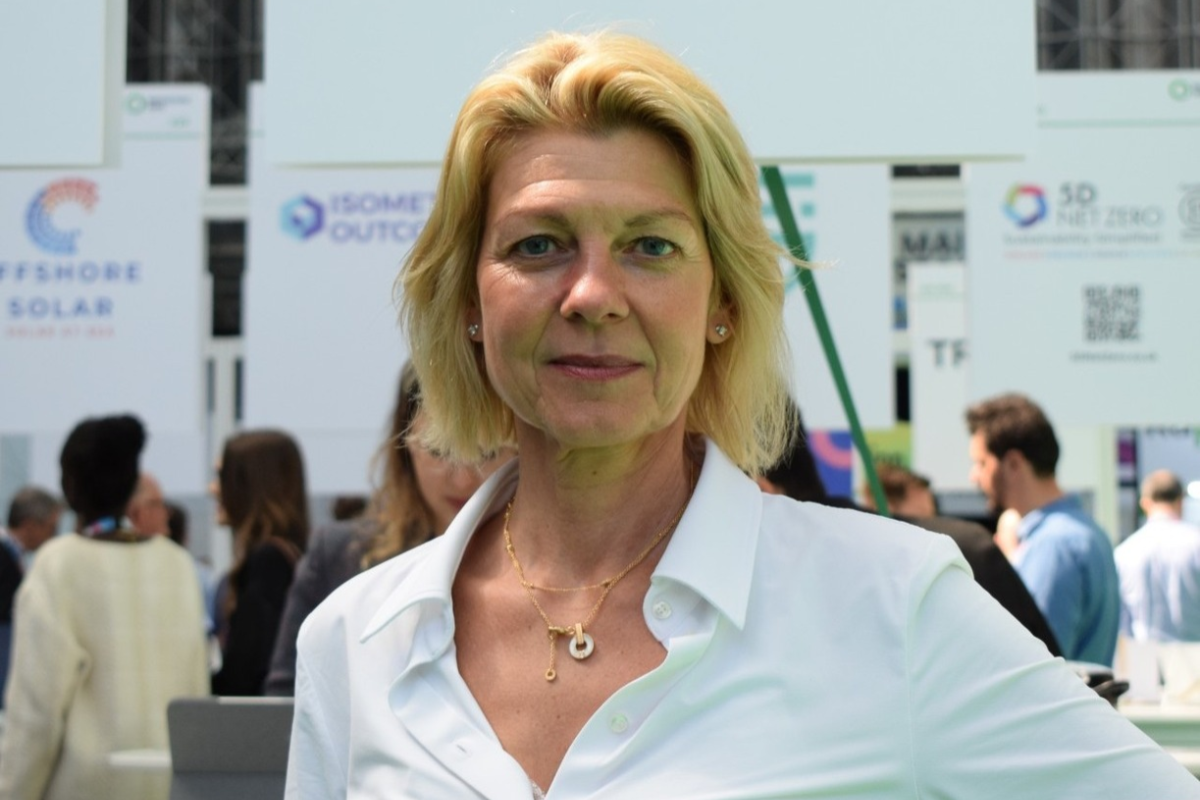
Philipp Herrmann is the Founder & CEO of BRYCK, a Germany-based deep tech innovation hub that’s focused on solving critical challenges and building a resilient future.
Philipp Herrmann is the Founder & CEO of BRYCK, a Germany-based deep tech innovation hub that’s focused on solving critical challenges and building a resilient future. Before BRYCK, he founded and led etventure, which was acquired by EY, where he also became a partner. He is an Admissions Interviewer for the Stanford Graduate School of Business and sits on the Advisory Board of Badencampus.
As an active mentor and advisor, he guides both startup entrepreneurs and the CEOs of industrial companies through the complexities of digital transformation.
In the world of deep tech and climate innovation, where the stakes are high and development cycles are notoriously long, Philipp emphasizes that "impact" cannot exist in a vacuum, it must be coupled with economic viability to survive the journey from lab to market.
“I think the key is to stay very close to the customer problem. Impact is important, of course, but impact on its own is not enough. The startup also needs to create real customer value - also in economic terms.
The best founders manage both by building something that solves a pressing problem and has a clear business case from day one.
The biggest challenges are still the usual ones: long development cycles, slow sales, difficult pilot phases, and not enough access to follow-on capital.”
As climate startups attempt to bridge the gap between Seed and Series A and B, Philipp believes a fundamental shift in the funding mix is necessary for deep tech to thrive in Europe.
“Founders need to think more broadly about capital. For many deeptech and climate startups, traditional VC is only one part of the picture.
You often need the right mix of venture capital, strategic investors, public support, and project-based financing. And Europe definitely needs better funding structures for these kinds of companies, especially more patient capital for startups that need longer to scale.”
This evolution is particularly vital when it comes to international success. Philipp notes that scaling is less about speed and more about understanding what is truly "repeatable" before attempting to plant flags in new territories.
This challenge of international scaling has sparked many discussions about "EU Inc," a proposed unified corporate framework designed to harmonize rules across the 27 member states, which he views with pragmatic optimism.
“The most important thing is to know what is actually repeatable in your business. A lot of founders expand too early and end up adding complexity instead of growth.
Before entering new markets, you need to be clear about your customer, your sales model, your delivery model, and what really works. Then you try to replicate internationally and customize for local needs only where necessary.
On EU Inc, I think the idea is very promising because it could remove a lot of unnecessary friction for founders in Europe. But it will not fix everything. It can help on the legal and structural side, but it does not solve the deeper issues like fragmented markets, different regulations, slow procurement, or the lack of growth capital.”
When discussing the current state of the European ecosystem more broadly, Philipp emphasizes that "future-readiness" is less about mimicry of other hubs and more about focused execution on home-grown strengths.
“To me, future-readiness means being able to turn Europe’s real strengths into action. We have outstanding research, strong industrial know-how, and a lot of talent. The real challenge is moving faster and connecting those strengths more directly to entrepreneurship.
Europe should not try to be a copy of Silicon Valley. Our strength is somewhere else. We are especially well positioned in areas like energy, health, climate, and industrial technology, where deep expertise and real-world application matter most. That is where Europe can lead.”
Looking forward, his personal excitement lies at the intersection of deep tech and systemic resilience, specifically where innovation meets the hard realities of industrial demand.
”I am especially excited by technologies that can change entire systems. Energy tech is a big one. Industrial applications of new technology are another. Health tech as well.
In general, I find the most exciting opportunities where deep technology meets real industrial demand. That is where innovation becomes relevant at scale.”
If he were to re-enter the arena as a founder today, he would “build at the intersection of industry, energy, and resilience. That is where some of Europe’s biggest challenges come together: competitiveness, decarbonization, productivity and increasingly also defensibility .
It is also where the need is very real and where you can build something with long-term value.”
As for his current work, the growth of BRYCK reflects this belief in collaborative innovation and practical outcomes.
.png)
“What I am most proud of is that we have built the BRYCK Startup Alliance as a truly entrepreneurial platform. We are bringing together startups, corporates, investors, and universities in a way that is practical and action-oriented.
We have already supported more than 150 startups from over 20 different countries and helped create real connections between innovation and industry.
Looking ahead, our priorities are clear: go deeper in our focus areas, create more pathways from pilot to scale, and strengthen BRYCK’s role as a European platform for impact-driven entrepreneurship.”
Thank you, Philipp Herrmann!