Interviews
Stay emotionally steady, continue to execute, and let reality guide your decisions - Robin Saluoks, eAgronom
February 4, 2026 · Oana Modorcea
.png)
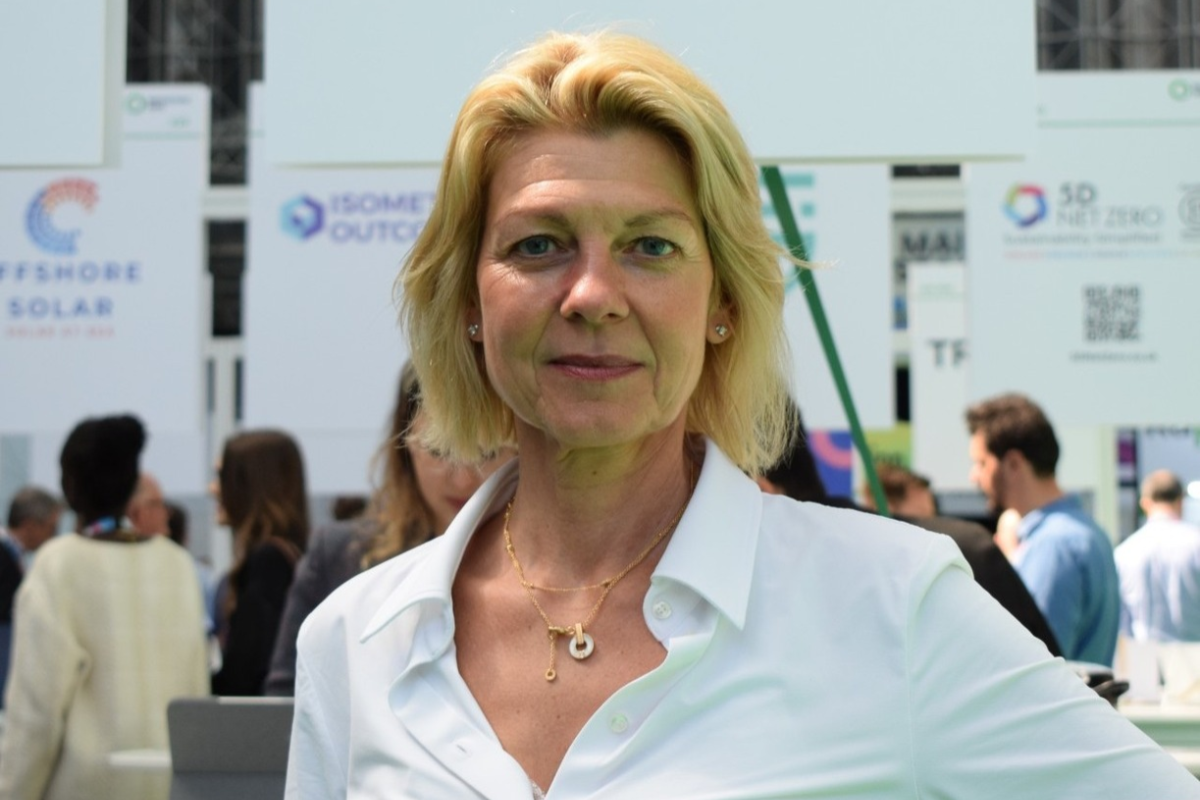
Robin Saluoks is the CEO & Founder of eAgronom, an Estonian company that helps farmers generate additional revenue streams, improve soil quality, and access better financing.
Robin Saluoks is the CEO & Founder of eAgronom, an Estonian company that helps farmers generate additional revenue streams, improve soil quality, and access better financing. Through their Carbon Program, the company enables farmers to get paid for creating carbon credits, improve soil quality, reduce input costs, and gain access to better financing terms.
eAgronom was launched more than 10 years ago and has since achieved several important milestones. The ones that matter most, Robin explains, are those that demonstrate real impact for real people.
.jpg)
“Reaching thousands of farmers who rely on our platform to manage their farms more easily is one of them. Today, 3,500 farmers use eAgronom to manage over 2.5 million hectares - that’s more than twice the total farmland in my home country, Estonia.
Other major steps have been moving to verified carbon credits, giving farmers a new source of income, and bringing on strong partners like Swedbank and Mondelēz, which helped us accelerate our mission.
And now we’ve just secured the Verra registration for our Soil Carbon Program. This is a major milestone for us, because it proves that carbon revenue can be real and scalable for farmers, and it gives us the green light to scale our carbon removal program into new regions.”
The business has scaled across multiple countries in Europe and Africa, and while markets may differ, the challenges remain largely the same regardless of geography.
“Farmers want to focus on farming, not on the constant burden of data reporting and the bureaucracy associated with agricultural food production. One of our goals has also been to conduct field trials in every country where we have clients, testing different sustainable farming practices, seed mixes, and other changes we ask farmers to adopt in their day-to-day operations. Because soil types and climate conditions vary, this approach has proven highly valuable, not only for our own learning, but also for bringing the farming community together through shared knowledge.”
One key element in their growth is that eAgronom never tried to sell “technology” as such, even if they are a tech solution. The reason is that “farmers don’t care about software, they care about whether something works and saves them time.
Our approach has always been to make technology almost invisible. A farmer shouldn’t have to sit behind a computer or fill in endless forms. When they see that the system removes stress, simplifies reporting, and even creates new income opportunities, adoption happens naturally. Trust is built by making their lives easier.”
In the next 3-5 years, Robin says that a main goal is “to fully automate on-farm data collection, so that farmers don’t need to use a computer, or even our mobile app, to report anything.
Everything should happen in the background, and it should actually improve the accuracy and detail of the data, not weaken it. Many companies compromise between data quality and the farmer’s workload; we don’t want to make that trade-off. Getting automation right is the foundation for everything else we’re building: carbon program, the AI Agronomist, government reporting, GHG accounting, and much more.”
Reflecting on the journey so far, one thing Robin has learned is that almost nothing is ever as good or as bad as it seems in the moment.
“There are points in the journey where a market shift, client churn, or a failed initiative makes it feel like everything is falling apart. But if you keep moving forward, you often realize it wasn’t nearly as dramatic - and you adapt.
The opposite is true as well. Some opportunities look incredibly shiny at first: a new market, a partner, a product idea. Over time, many of them turn out to be just fine. Useful, but not transformational.
What matters is staying emotionally steady, continuing to execute, and letting reality - not hype or panic - guide your decisions.”
If he were to start eAgronom today, he says that the main thing he’d do differently is be more deliberate”
“People often say you should move fast or you miss the opportunity, but what I’ve learned is that real market shifts - especially in agriculture - take much longer than you expect.
If I were starting today, I would be more deliberate: focus on fewer things, say no more often, and do the most important work properly instead of trying to do everything at once.”
It’s neither easier nor harder to start an impact-focused business now, he says, because there are always good opportunities for new startups.
“What changes is where those opportunities are. Today, there’s more awareness around impact and more capital looking for it, which helps. At the same time, expectations are higher: stronger proof, clearer economics, and real results, not just good intentions.
So the bar has moved, but it hasn’t disappeared. For founders who are solving real problems and are willing to build patiently, the opportunity is still very much there.”
To see more impact startups, Robin says that what we need is to treat CO₂ emissions as waste that must be handled responsibly.
“We would never accept companies leaving physical garbage on the street. CO₂ is not fundamentally different: it is a by-product of our activities and needs proper management.
At the same time, it’s unrealistic to believe that modern life can exist without any waste at all, including CO₂. The real question is not whether waste exists, but how we deal with it. This is where impact startups come in. For example, soil carbon offers a way to recycle CO₂ into something productive - healthy, fertile soil - rather than pretending emissions can simply disappear.”
Lastly, Robin participated in the World Economic Forum in Davos, where he was a speaker. He shared several insights from the event:
“At Davos, what stood out to me was a clear shift toward climate pragmatism. The conversation has moved away from both climate denial and unrealistic perfectionism.
Fewer people now expect a world where companies simply stop emitting altogether - and that’s a healthy change. I mostly met people in the middle: those who fully accept that climate change is real and driven by human activity, but who also understand that it won’t be solved by dismantling modern life or the economy.
The focus was on practical, scalable solutions that work within reality. Soil carbon fits naturally into this thinking. It treats emissions as something that must be managed responsibly and turned into long-term value, rather than ignored or wished away.”
Thank you,
Robin Saluoks!