Interviews
The ideal ecosystem is one where startup-corporate collaboration is not exceptional, but built in. - Philippa Köhnk, BRYCK Startup Alliance
May 7, 2026 · Oana Modorcea
.png)
In this interview, we are looking in depth at the impact-startups - corporates collaboration, blockers and changes needed for innovation-driving partnerships.
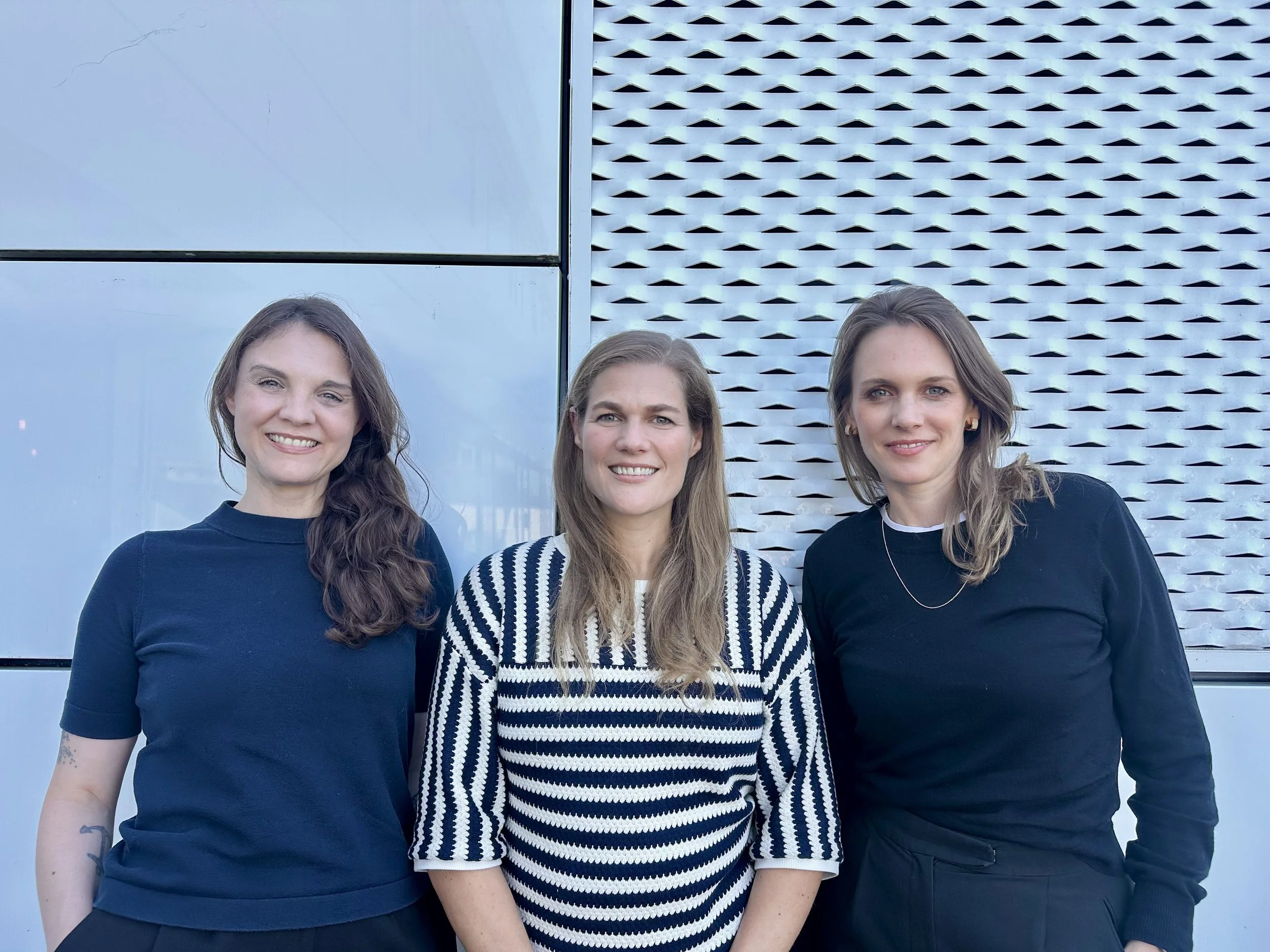
Philippa Köhnk is a Managing Director at BRYCK Startup Alliance and a serial entrepreneur, with 15+ years of experience in entrepreneurship and corporate innovation management. BRYCK is a Germany-based deep tech innovation hub that’s focused on solving critical challenges and building a resilient future, whose CEO and Founder, Philipp Herrmann we previously interviewed.
In this interview, we are looking in depth at the impact-startups - corporates collaboration, blockers and changes needed for innovation-driving partnerships. As she brings a wealth of experience in both business environments, Philippa makes some great points on what needs to change, misconceptions and opportunities.
First of all, she says that the common perception that corporates are slow, risk averse and sometimes - even blockers of innovation - is still true in some cases. This happens for a reason, but change is happening, she explains:
“Large companies are not built like startups. They are built to manage complexity, reduce risk, and keep operations running. So naturally, they move differently.
But I would be careful not to stop there. Because what we see today is that many corporates have understood that not moving is often the bigger risk. Especially in areas like energy, healthcare, industrial transformation or sustainability, they know they cannot innovate only from within anymore.
So yes, corporates can be slow. But they are not automatically blockers. In the best cases, they are incredibly valuable partners because they bring market access, infrastructure, operational know-how and real implementation environments.
That is particularly relevant for B2B and impact-driven startups — and that is exactly where the BRYCK Startup Alliance positions itself, with a strong focus on industrial and science-based innovation in fields like energy, healthcare, hydrogen and chemicals.”
The idea that “startup teaches corporate how to innovate”, she adds, is too simplistic and doesn’t really reflect reality.
”A more realistic model is a two-way exchange. Startups bring speed, deep focus, technical ambition and a willingness to rethink things from scratch.
Corporates bring industry access, scale, infrastructure, customer understanding and the ability to bring a solution into real operational contexts.
The key is that neither side should treat the other as a utility. Startups are not just idea suppliers. Corporates are not just budget holders.
If it works well, both sides get smarter. A startup sharpens its product against real market needs. A corporate gets access to new products and faster implementation.
That can mean pilot projects, product co-development, expert access, customer feedback, data, distribution channels or strategic investment. BRYCK is built around exactly that logic: connecting startups, corporates, investors and academia so innovation does not stay theoretical.”
Regarding impact-driven startups, corporates often play a critical role, Philippa explains, because they sit inside the systems that need change.
”If you are building in energy, healthcare, food, industrial efficiency, water or circularity, you are usually solving a problem that is embedded in infrastructure, supply chains, regulation and existing processes. And that is exactly where corporates come in.
They can validate whether something works in the real world. They can open doors to pilot environments. They can provide access to operational data. They can become the first meaningful customer. And sometimes they can move a startup from “interesting technology” to “actual market relevance.”
You can see that in the BRYCK portfolio quite well. Startups like Greenflash, Shit2Power, Green Ocean, everyone energy or ICODOS are all working in areas where access to industry is fundamental to whether the solution can scale at all. The same applies in health, where startups like dubidoc or QRaGo are operating in systems where partnerships matter enormously.”
Something impact-driven startups often misunderstand about working with corporates is the speed at which big companies move and the impact of the real value added.
“Even when there is genuine interest, corporates still need internal alignment.
There are budgets, legal teams, procurement rules, technical departments, operational owners and often multiple decision-makers involved. Startups sometimes underestimate how much coordination sits behind a simple “yes, let’s explore this.” Also, startups often work in days or months. Corporates work in budget cycles, governance processes and long implementation horizons. That doesn’t mean they should stay slow forever — but it does mean both sides need to be very explicit early on.
The second misunderstanding is around value exchange. Many impact founders understandably lead with the mission. But inside a corporate, the mission alone is not enough. You also have to explain the business case. What becomes faster, cheaper, safer, more compliant, more resilient, or more efficient? Where exactly is the value?”
She shares a real life example of a corporate - impact startup collaboration from BRYCK’s portfolio that genuinely accelerated innovation.
“A very tangible example is the collaboration between Acquaint and RAG AG through the BRYCK WaterHub.
RAG and BRYCK defined a real industry challenge around monitoring and maintaining mine-water infrastructure, and Acquaint was selected as the startup solution.
What made the collaboration so valuable is that it quickly moved beyond a pitch setting into real-world testing: Acquaint developed a new prototype for the specific conditions in vertical pipelines, deployed it at RAG's "Friedlicher Nachbar” site in Bochum and tested in a 240-meter pipe system under actual operating conditions.
That is exactly what meaningful corporate-startup collaboration looks like to me: the startup brings a focused technology, the corporate brings infrastructure, real application context and implementation depth — and together, innovation moves much faster because it is validated where it actually has to work.”
To see more similar partnerships, where corporates and startups drive real impact, established companies need to make some structural changes, she comments.
“First, they need clear ownership. A startup should not have to navigate six departments and three internal political battles just to get a pilot off the ground. Someone has to own the relationship and have enough authority to move it forward.
Second, they need startup-compatible processes. If procurement, legal and compliance are designed only for large incumbents, early-stage collaboration becomes almost impossible. Corporates do not need to drop their standards — but they do need pathways that are proportionate to startup reality.
Third, they need to define problems better. “We want innovation” is not a useful starting point. Startups need concrete use cases, clear pain points and honest success criteria.
And maybe most importantly, corporates need to reward learning, not just certainty. If every collaboration is judged only by short-term perfection, you will kill the very thing you say you want: experimentation.
The best partners are the ones who are structured enough to work seriously, but open enough to let something new emerge.”
For impact startups, especially in B2B and deep-tech, access to industry - so to the big companies where shifts must happen - is at least as important as capital if not even more so, Philippa ads.
“Of course capital matters. But capital alone does not give you a pilot site. It does not give you a first industrial customer. It does not tell you how your technology behaves under real operational pressure. And it does not create the kind of proof points that later-stage investors want to see.
That is why corporates can play such a decisive role. They can act as pilot partners, launch customers, reference clients, strategic investors or simply as credible collaborators who help startups understand the real constraints of the market.
That is also why BRYCK’s positioning in the Ruhr region is so powerful: it combines industrial density, university strength and B2B application focus in a way that makes this bridge between startup and industry unusually tangible.”
Looking ahead, she says that an ideal ecosystem look like where corporates, startups, and investors truly co-create solutions to global challenges is defined by collaboration as a norm.
“For me, the ideal ecosystem is one where collaboration is not exceptional, but built in. Where startups can test and scale in real markets, corporates are open to working with early-stage solutions, and investors back what has already been validated in practice.
That is exactly the kind of environment we need if we want to solve complex industrial and societal challenges. And it is very much the idea behind BRYCK: bringing the right players together early, so innovation does not happen in parallel worlds, but in real collaboration.”
Thank you, Philippa Köhnk!